

Subtotal $0.00
 24 Hour Emergency Aid
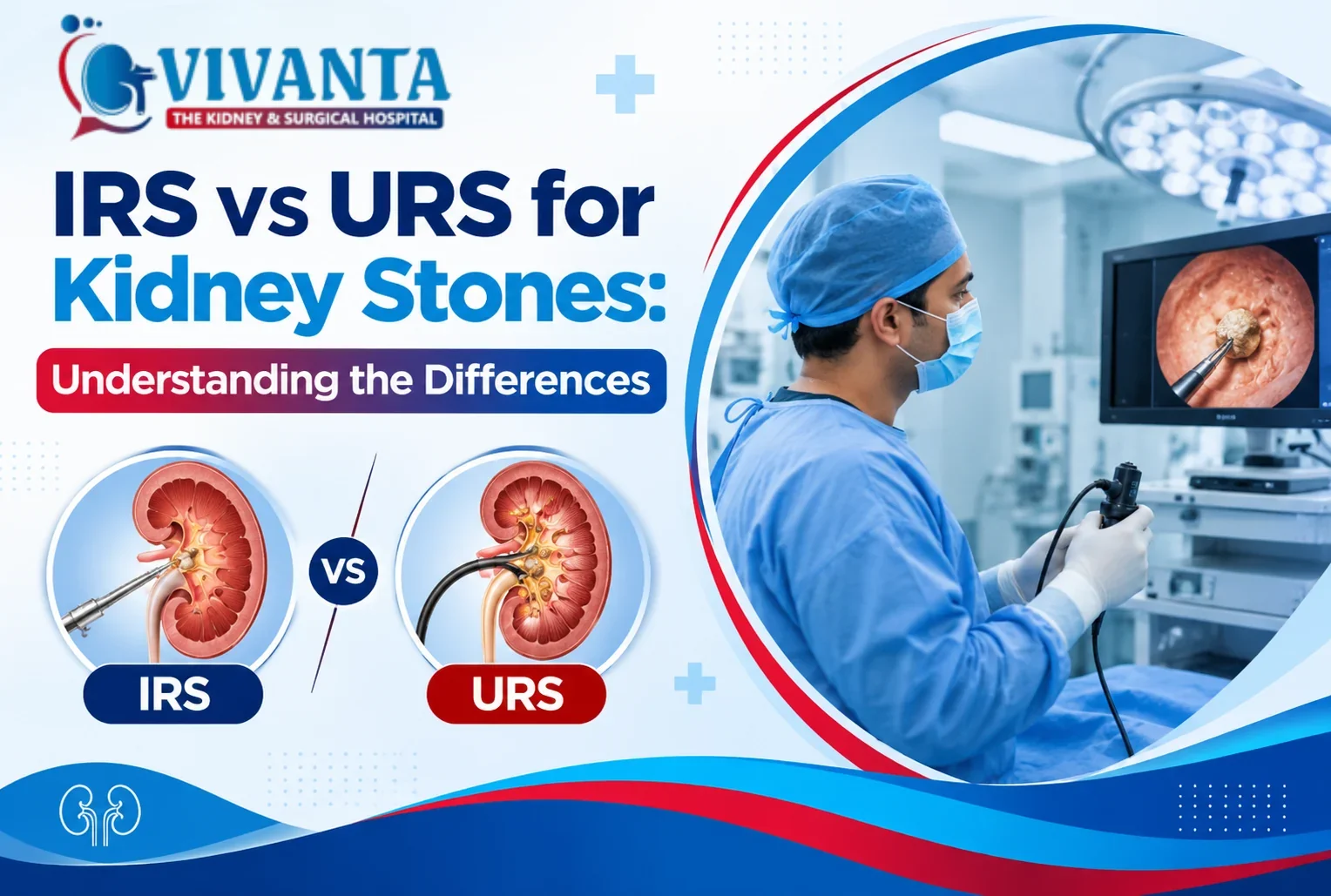
A kidney stone can cause sharp pain. Sometimes, it can also block urine flow. If your doctor suggests surgery, you may hear two terms: RIRS and URS. Both treatments remove or break stones without making cuts in your skin. Still, they work in different ways. RIRS usually treats stones inside the kidney, while URS often treats stones in the tube that carries urine to the bladder.
But which treatment is right for you? This guide explains the difference between RIRS and URS, how each procedure works, what happens during recovery, and how doctors choose the right treatment for your condition.
What Is the Difference Between RIRS and URS for Kidney Stones?
The main difference between RIRS and URS is where they treat stones. RIRS usually treats stones inside the kidney. URS mainly treats stones in the ureter, the tube that carries urine from the kidney to the bladder.
Both use a thin tube with a camera to reach the stone. However, RIRS uses a flexible scope that can bend inside the kidney.
Here’s a quick comparison.
| Feature | RIRS | URS / URSL |
|---|---|---|
| Full form | Retrograde Intrarenal Surgery | Ureteroscopy / Ureteroscopic Lithotripsy |
| Main treatment area | Inside the kidney | Mainly the ureter |
| Scope used | Flexible | Often rigid or semi-rigid |
| Best suited for | Many small to medium kidney stones | Stones stuck in the ureter |
| Stone removal | Laser breaks stones into small pieces | Laser breaks stones or tools remove them |
| Skin cuts | No routine skin cuts | No routine skin cuts |
| Anaesthesia | Usually general | Usually general |
| Cost | Often higher | Often lower |
RIRS is a form of flexible ureteroscopy. So, these treatments are closely related.
Neither is better for every patient. Your doctor will choose based on your stone and overall health.
How Are RIRS and URS Procedures Performed?
Both procedures use the body’s natural urine passage to reach the stone. This means the surgeon usually doesn’t need to make a cut in your skin.
However, the steps differ slightly.
How Does RIRS Remove Stones From the Kidney?
During RIRS, the urologist passes a thin, flexible tube through the urine passage, into the bladder, and up to the kidney.
A small camera helps the doctor find the stone.
Once located, a laser breaks the stone into tiny pieces. Some pieces may be removed, while smaller particles may pass through urine.
The flexible scope can bend to reach areas inside the kidney.
Sometimes, the doctor places a temporary DJ stent, a small tube that helps urine flow from the kidney to the bladder.
How Does URS Remove Stones From the Ureter?
URS works in a similar way. However, the doctor usually treats stones stuck in the ureter.
A thin scope passes through the bladder and into the ureter.
The doctor may remove a small stone using a special tool. Larger stones can be broken into pieces with a laser.
A flexible scope may be used when the stone is higher up.
Both treatments often allow patients to go home the same day or after a short stay. Your doctor will decide based on your condition.
Which Is Better for Your Kidney Stone: RIRS or URS?
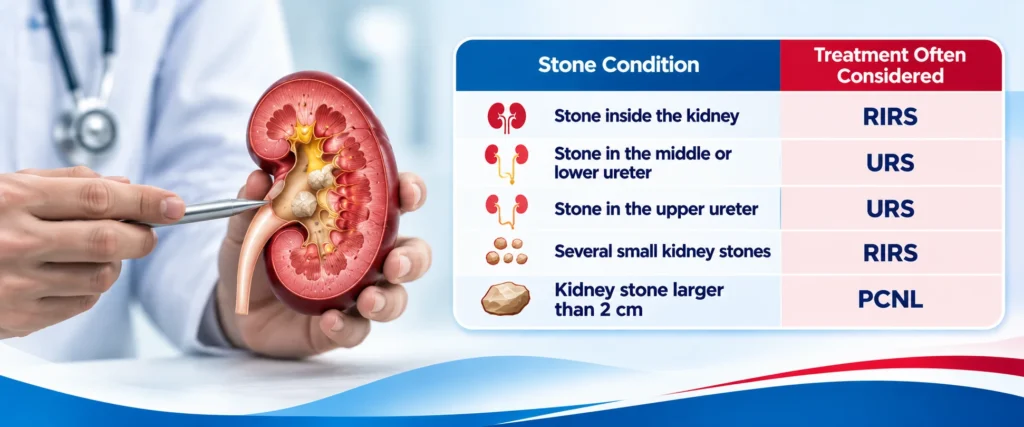
RIRS is often suitable for stones inside the kidney, while URS is commonly used for stones in the ureter.
However, location isn’t the only factor.
Your doctor will also check the stone’s size, number, and position. A CT scan or another suitable imaging test helps with this decision.
| Stone Condition | Treatment Often Considered |
|---|---|
| Stone inside the kidney | RIRS |
| Stone in the middle or lower ureter | URS |
| Stone in the upper ureter | URS, sometimes with a flexible scope |
| Several small kidney stones | RIRS may be suitable |
| Kidney stone larger than 2 cm | PCNL is often preferred |
Why Does Stone Location Matter?
Imagine a stone stuck in the middle of the ureter. A rigid or semi-rigid scope may reach it without much difficulty.
Now imagine a stone sitting deep inside the kidney. A flexible scope can bend and reach areas that a rigid scope cannot. That’s why two patients with stones of similar size may need different treatments.
Does Stone Size Change the Decision?
Yes. Stone size plays an important role.
Doctors often consider RIRS for kidney stones smaller than 2 cm. However, selected larger stones can also be treated this way.
For kidney stones larger than 2 cm, doctors often recommend PCNL (Percutaneous Nephrolithotomy). This procedure removes stones through a small opening in the back.
Your doctor will also consider kidney function, infection, and past treatments.
Remember, not every kidney stone needs surgery. Some small stones pass naturally with suitable medical care.
What Should Patients Expect During Recovery After RIRS or URS?
Most patients recover from RIRS or URS within a relatively short time. However, your recovery depends on the stone, the procedure, and your overall health.
After surgery, you may notice:
- Mild burning when passing urine
- A small amount of blood in urine
- Temporary pain in the lower abdomen or side
- Frequent urination, especially if you have a DJ stent
These problems often improve with time.
If your doctor placed a DJ stent, you may feel some discomfort until it is removed.
Your doctor will explain when you can return to work, exercise, and normal activities.
When should you seek urgent medical help?
Contact your doctor or seek urgent care if you have fever, chills, severe pain that gets worse, heavy bleeding, or trouble passing urine.
Also, attend your follow-up visit even if you feel well. Your doctor may need to check whether the stone has cleared or remove the stent.
What Are the Possible Risks of RIRS and URS?
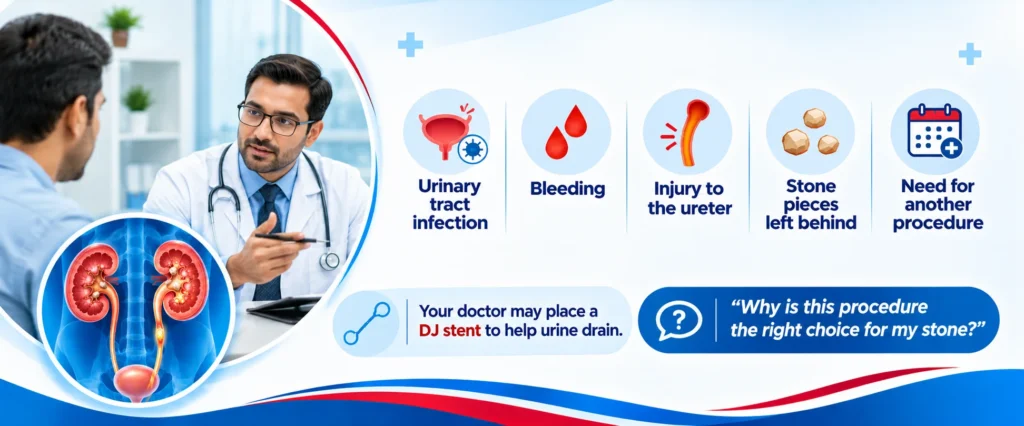
Both RIRS and URS are commonly performed treatments, but they still carry some risks.
These include:
- Urinary tract infection
- Bleeding
- Injury to the ureter
- Stone pieces left behind
- Need for another procedure
Sometimes, swelling or a narrow urine passage makes it hard to complete the treatment in one session.
Your doctor may place a DJ stent to help urine drain. However, not every patient needs one.
Before surgery, ask your urologist:
“Why is this procedure the right choice for my stone?”
Your doctor should explain the expected results, possible risks, and other treatment options.