

Subtotal $0.00
 24 Hour Emergency Aid
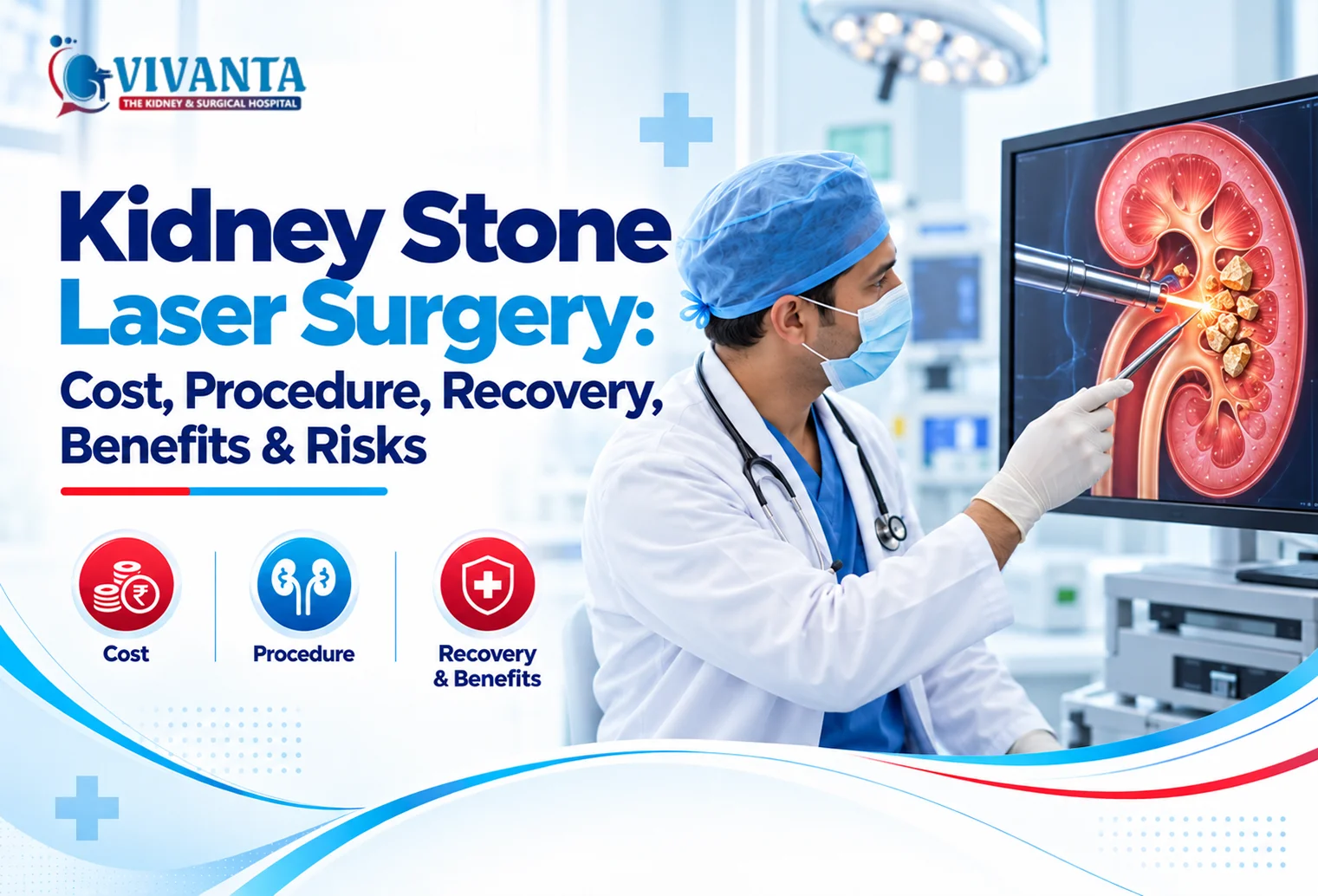
The presence of Kidney Stones is capable of turning an ordinary day into a difficult one due to the capacity of these stones to interfere with the natural flow of urine from the body. In cases where medical intervention is not enough for dealing with the condition, laser surgery for kidney stones will turn out to be among the options available.
This form of surgery involves the use of a highly slender instrument that passes through the urinary tract to the stone. The laser is employed in breaking down the stone to smaller pieces that can then be flushed out through urine. There are several considerations that determine the kind of surgery to be carried out. They include the size, number, location, and health of the kidneys. It is important to have knowledge about various aspects concerning surgery before getting on board. Let us begin!
What Is Kidney Stone Laser Surgery?
Laser surgery for kidney stones is an operation where the stone is broken up and removed via an operation that uses a minimum of invasion. Most of the time, the operation known as ureteroscopy requires the insertion of a long instrument known as the ureteroscope to be inserted into the ureter or kidney through the urethra and bladder.
According to Mayo Clinic, kidney stones can affect any part of your urinary tract — from your kidneys to your bladder. Often, stones form when the urine becomes concentrated, allowing minerals to crystallize and stick together. When stones become lodged in the urinary tract or cause complications, surgical procedures like laser surgery may be needed.
The specific treatment that will be used depends on several factors including the stone’s size, location, number, composition, kidney stone symptoms, and the status of the urinary tract.
How Does Kidney Stone Laser Surgery Work?
Kidney stone laser surgery involves six simple steps, from preparation to stone removal, helping patients understand what happens during the procedure.
Pre-surgical Assessment
Prior to the surgery, your urologist will review your symptoms, history, drug regimen, imaging scans, and lab tests. Your imaging can determine the size and location of your stone, which helps your urologist decide the most appropriate approach to kidney stone treatment, while lab tests may identify infection or assess kidney function.
Anaesthesia
Ureteroscopy for stones removal is normally done under anaesthesia. The anaesthetist will review your medical history and your medications prior to surgery. You will be given instructions regarding food, liquid, and medication intake.
Insertion of ureteroscope
The urologist will carefully insert a thin ureteroscope through your urethra and bladder, through the ureter, and if necessary into your kidney. This technique usually doesn’t require an incision as the ureteroscope follows the natural pathway of your urine.
Laser fragmentation of stone
Having identified the stone, the urologist proceeds to use a very thin laser fiber to fragment the stone into smaller pieces. This will depend on the type of stone and the mode of treatment. At times, the laser will fragment the stones into smaller pieces that will be allowed to go through the urine.
Removal of the Stone
Smaller fragments of the stone can be removed using a tiny basket through the ureteroscope. Some of the fragments can also remain in the body to pass via the urine depending on the size and type of the stone.
Temporary Ureteral Stent
After the surgery, a temporary ureteral stent might be placed to allow the urine to flow from the kidney to the bladder while the ureter settles. The use of the stent can cause frequent urination or bleeding.
Kidney Stone Laser Surgery Cost in India
The kidney stone laser surgery cost in India can vary widely because there is no single price that applies to every patient or hospital.
| Cost factor | Why it matters |
| Stone size and location | Larger, multiple, or difficult-to-reach stones may require a more complex procedure. |
| Type of procedure | URS and RIRS may have different costs depending on the stone’s location and treatment plan. |
| Surgeon and hospital charges | Professional fees, operating-room charges, and hospital facilities can affect the bill. |
| Anaesthesia | Anaesthesia charges may form part of the surgical package or be billed separately. |
| Tests before surgery | Blood tests, urine tests, ultrasound, X-ray or CT may add to the total. |
| Stent and follow-up | Stent placement, removal, medicines, and follow-up visits may involve additional charges. |
| Insurance | Eligible coverage can reduce the amount a patient has to pay personally. |
Estimates in India have great variation between hospitals and modes of treatment. The current published estimates in India range from about ₹60,000 to more than ₹2 lakh for laser/RIRS, depending upon the mode, the hospital, the location, stone type and the inclusions in the cost. The above-mentioned cost is just an estimate, not a quote for any individual patient.
For getting a precise quote, request for the quote at the hospital after reviewing the reports.
Is Kidney Stone Laser Surgery Covered by Insurance?
Laser surgery for kidney stones is typically covered by health insurance if it is deemed medically necessary and falls within your policy’s terms. However, coverage limits, copayments, and waiting periods depend entirely on your specific plan and insurance provider.
Kidney Stone Laser Surgery Recovery Time and Expectations
Kidney Stone Laser Surgery Recovery time is usually brief when the operation proceeds well but depends on factors such as the stone’s nature, the treatment approach chosen and if a stent is inserted or not.
- Day 1-2: Burning sensation, feeling tired, urinary frequency, or presence of blood in the urine might be experienced. Take rest and obey your physician’s advice.
- Few days after: Most individuals can go back to work and perform daily routines if you feel good enough. Physical jobs need more recovery period.
- Week 1: Most people are able to lead an active lifestyle, while discomfort from a stent may persist until its removal.
Each person experiences this period differently and hence, it is recommended to prioritize your urologist’s directions.
What Can You Expect After Surgery?
After laser surgery to remove kidney stones, It is normal to experience some pain or irritation when urinating after your treatment to remove kidney stones through lasers. The discomfort associated with the stent will make things even more uncomfortable. In most cases, patients are able to resume their normal activities after several days.
Benefits of Kidney Stone Laser Surgery
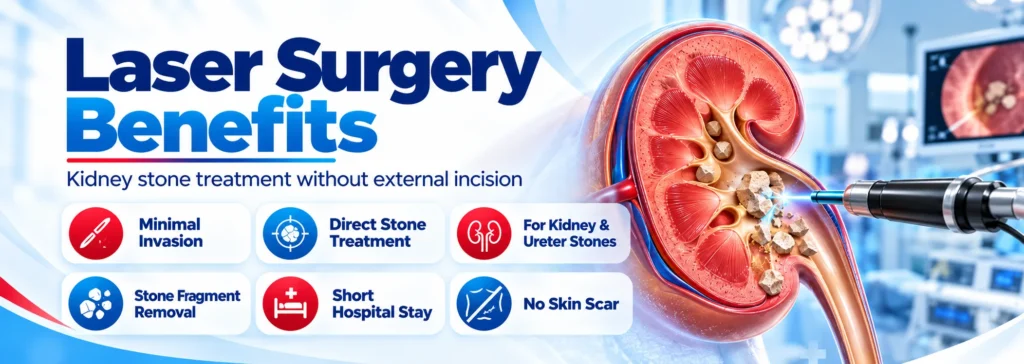
Appropriate use of laser treatment will help get rid of the stones without making any external incision.
- Minimal invasion: Usually, the ureteroscope makes its way inside through the urinary tract without the need for making any external incision.
- Direct stone treatment: The stone is visible to the surgeon and therefore can be treated directly using laser light.
- Suitable for kidney and ureter stones: The scopes used in ureteroscopy can be flexible or rigid depending on the location of the stone.
- Removal of stone fragments: Large fragments can be extracted by using the basket while smaller ones will be expelled out in the urine.
- Short hospital stay: Most people leave the hospital on the same day or the next day after ureteroscopy.
- No skin scar in ureteroscopy: Since the procedure is done using the ureteroscope that passes through the urinary tract, there will be no skin scar here.
However, the right treatment procedure needs to depend on both the stone and the patient’s health condition.
Risks and Complications of Kidney Stone Laser Surgery
Although generally considered minimally invasive, kidney stone laser surgery can still have complications, and the risks vary with each patient’s condition.
As noted by MedlinePlus — U.S. National Library of Medicine, kidney stones vary in size, shape, and color, and unusually large stones or stones that are difficult to pass can require medical removal. While laser surgery is highly effective, patients should be aware of the possible risks before proceeding.
- Urinary discomfort: Burning while urinating, urinary frequency, and mild discomfort can occur for several days after treatment.
- Blood in urine: A small amount of blood in the urine may occur temporarily after ureteroscopy and usually settles during recovery.
- Urinary infection: Infection can occur after treatment and may require medical assessment, antibiotics, or additional care.
- Ureteral injury: The ureter can rarely be injured during the procedure, sometimes requiring additional treatment or temporary stenting.
- Residual stone fragments: Some stone material may remain and occasionally require further treatment depending on its size and location.
- Stent-related symptoms: A stent can cause bladder discomfort, urinary urgency, frequent urination, or blood in the urine until removal.
Discuss the expected benefits and possible complications with your urologist before deciding on treatment.
When Should You Contact a Doctor After Surgery?
Contact your doctor promptly if you develop fever, chills, severe or worsening pain, difficulty passing urine, heavy bleeding, persistent vomiting, or feel unusually unwell after surgery. These symptoms can sometimes indicate infection, obstruction, or another complication and should not be ignored.
What Tests Are Needed Before Laser Stone Surgery?
Your doctor may suggest a number of investigations before surgery to get information about the stone and to find out if you are suitable for surgery. Based on your condition, they may consist of:
- Urine test and urine culture: To detect any blood and urinary infections.
- Blood tests: To assess kidney function and others.
- Ultrasound: To detect the presence of stones and any urinary obstruction.
- KUB x-ray: To locate certain types of stones.
- CT scan: In case needed, to get more information about the stone, its size, location, and urinary tract anatomy.
More investigations may be needed based on your age, history, medication, and anesthesia.
Conclusion
Kidney stone laser surgery is a minimally invasive treatment that can help break and remove kidney or ureter stones when they are difficult to pass naturally or cause complications. The procedure, recovery time, risks, and kidney stone laser surgery cost can vary depending on the stone’s size, location, number, treatment method, hospital, and individual health condition.
Before choosing laser surgery, a urologist may recommend imaging and laboratory tests to determine the most appropriate treatment approach. If you are experiencing persistent pain, urinary problems, recurrent kidney stones, or symptoms of infection, consult a qualified urologist for proper evaluation and treatment advice.
Medical Disclaimer: This article is for general educational purposes and does not replace a medical consultation. Kidney stone treatment, surgery, recovery, and insurance coverage vary between patients. Always consult a qualified urologist for diagnosis, treatment selection, and personalised medical advice.
Frequently Asked Questions