

Subtotal $0.00
 24 Hour Emergency Aid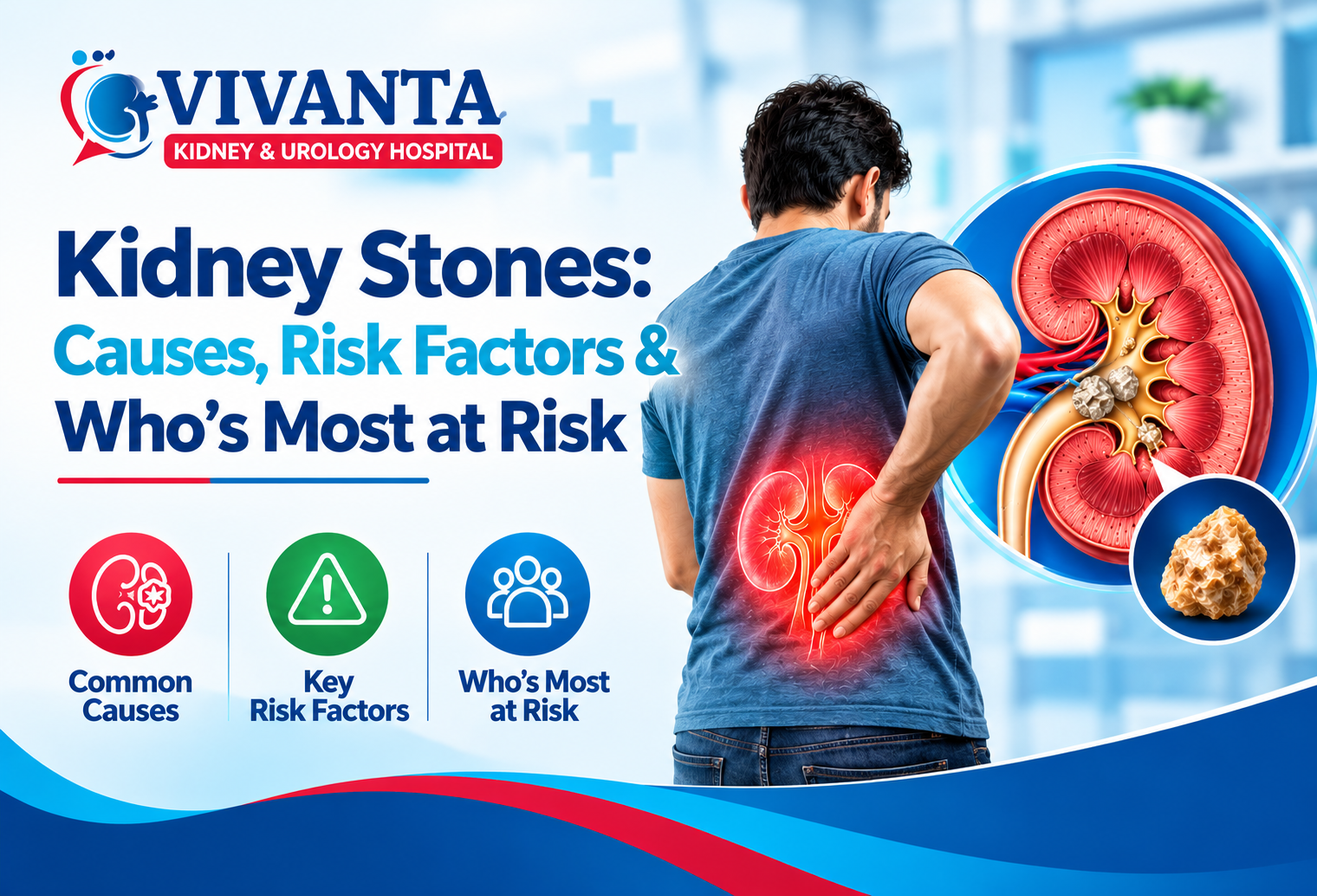
Kidney stones are one of the most common urological conditions worldwide, and yet most people only start asking “why did this happen to me?” after their first painful episode. The honest answer is that kidney stones rarely have a single cause. They form gradually, over weeks or months, as a result of several factors working together inside the urinary system.
Understanding what actually causes stones — and whether you personally carry a higher risk — is the first step toward preventing them, or stopping a first stone from becoming a lifelong, recurring problem. This guide breaks down the science in plain language, and outlines exactly who needs to pay closer attention.
How Does a Kidney Stone Actually Form?
Urine naturally carries dissolved minerals and salts — calcium, oxalate, uric acid, phosphate — out of the body. A stone begins to form when urine becomes supersaturated, meaning it contains more of these substances than the fluid can hold in solution. The excess minerals crystallise, and over time, these crystals can bind together into a hard mass: a kidney stone.
According to the UW Medicine Department of Urology, the single most common contributing factor across all types of kidney stones is dehydration — simply put, the less urine your body produces, the more concentrated it becomes, and the easier it is for these crystals to form.
The Core Causes of Kidney Stones
1. Not Drinking Enough Water
Low fluid intake is, by a wide margin, the most preventable cause of kidney stones. When you’re dehydrated, your kidneys produce a smaller volume of more concentrated urine, giving stone-forming minerals a much easier environment to crystallise in. UCI Health notes that adults should generally aim for at least 3 litres (about 100 ounces) of fluid a day, with water being the ideal choice, and that a simple warning sign of inadequate hydration is dark yellow urine.
2. Hot Climates and Physical Exertion
People who live, work, or exercise in hot conditions lose more fluid through sweat, which further concentrates the urine. Research published in the International Journal of Epidemiology confirms that high ambient temperatures are consistently linked to a short-term rise in kidney stone presentations, since heat causes water loss and lower urine volume — both of which promote crystal formation. This is a particularly relevant risk factor for anyone in a hot climate who doesn’t proportionally increase their fluid intake.
3. Diet High in Sodium, Animal Protein, or Oxalate
What you eat has a direct effect on what ends up in your urine. The Department of Urology at UW Medicine explains that diets high in animal protein, salt, or oxalate-rich foods — such as green leafy vegetables, nuts, tea, and chocolate — can increase the risk of stone formation. Excess dietary sodium is particularly significant, since high salt intake raises the amount of calcium excreted in urine, directly feeding calcium stone formation.
Interestingly, restricting dietary calcium is not the answer for most people — in fact, UCI Health points out that low-calcium diets may actually contribute to stone formation in people prone to stones, since dietary calcium normally binds with oxalate in the gut before it reaches the kidneys.
4. Family History and Genetics
If a parent or sibling has had kidney stones, your own risk is meaningfully higher. A retrospective review of stone patient pedigrees published in PMC found that patients with a family history of renal stones are more likely to experience recurrence, and that other relatives may also develop stones — sometimes at a younger age — pointing to an underlying genetic influence layered on top of shared diet and lifestyle habits within a household.
5. Obesity and Excess Body Weight
Carrying excess weight changes the acid balance in urine, which can encourage certain types of stones to form. A large cross-sectional study on nephrolithiasis risk factors, published in PMC, found that a high BMI was independently associated with increased stone risk, alongside other lifestyle factors like inactivity and low fluid intake.
6. Digestive and Bowel Conditions
Conditions that affect how the intestines absorb nutrients — including inflammatory bowel disease, chronic diarrhea, malabsorption disorders, and a history of gastric bypass surgery — significantly raise stone risk. As explained by UW Medicine Urology, these conditions can cause the body to lose large amounts of fluid, lowering urine volume, while also altering how oxalate is absorbed — a combination that creates ideal conditions for stone formation.
7. Hyperparathyroidism and Calcium Imbalance
The parathyroid glands regulate calcium levels in your blood. When they become overactive — a condition called hyperparathyroidism — excess calcium is released from the bones into the bloodstream and eventually filtered into the urine. According to the NIDDK, this excess urinary calcium is a well-documented cause of kidney stones, and treating the underlying parathyroid condition can prevent further stone formation.
8. Chronic Medical Conditions
Diabetes, high blood pressure (hypertension), gout, and certain kidney diseases such as renal tubular acidosis are all associated with a higher risk of stone formation. The Bisha population study published in PMC found that urolithiasis was significantly associated with diabetes, hypertension, and gout, alongside family history and smoking — reinforcing that kidney stones are often connected to broader metabolic health.
9. Certain Medications
Long-term use of specific medications can increase stone risk. The NIDDK lists diuretics (water pills) among the medicines associated with a higher likelihood of developing kidney stones, alongside calcium-based antacids used over long periods.
10. Recurrent Urinary Tract Infections
Certain kidney stones — known as struvite or infection stones — form directly as a result of chronic or recurrent urinary tract infections. These stones can grow rapidly and are treated differently from calcium or uric acid stones, making it especially important to treat urinary infections promptly rather than let them recur untreated.
Who’s Most at Risk of Developing Kidney Stones?
While anyone can develop a kidney stone, certain groups are statistically far more likely to:
- Men — Men are almost twice as likely to develop kidney stones as women, according to UC Davis Health Urology.
- People with a personal or family history of stones — A previous stone significantly raises the likelihood of another, and a family history compounds this risk further.
- People aged 15–30 — A cross-sectional study on nephrolithiasis risk factors found this age group had the highest prevalence of kidney stones, alongside male gender and inadequate water intake, published in PMC.
- People who are overweight or obese
- People living in hot or dry climates, particularly those with physically demanding outdoor jobs
- People with diabetes, hypertension, or gout
- People with inflammatory bowel disease or a history of bariatric/gastric bypass surgery
- People on long-term diuretics or calcium-based antacids
- People with low daily water intake, especially those who substitute water with tea, coffee, or sugary beverages without adjusting total fluid volume
If you fall into two or more of these categories, it’s worth discussing your personal risk profile with a urologist — particularly if you’ve already had one stone, since recurrence is common without targeted prevention.
Can Kidney Stones Be Prevented?
In most cases, yes — at least partially. The most effective prevention strategies, drawn directly from the causes above, include:
- Increasing daily water intake, especially in hot weather or after intense physical activity
- Reducing dietary sodium to help lower urinary calcium excretion
- Maintaining normal (not restricted) dietary calcium, paired with lower oxalate intake if you’re prone to calcium oxalate stones
- Managing body weight through balanced diet and regular activity
- Treating underlying conditions such as diabetes, gout, or hyperparathyroidism
- Reviewing long-term medications with your doctor if you’re on diuretics or calcium antacids
Because stone composition varies from person to person, the most reliable prevention plan is one built around a proper metabolic evaluation, including urine and blood tests — rather than generic advice alone.
Understand Your Personal Risk: Get Evaluated at Vivanta Kidney Hospital, Surat
Kidney stones are rarely caused by just one factor — which is exactly why generic advice often isn’t enough to prevent them long-term. At Vivanta – The Kidney & Surgical Hospital, Surat, our specialists go beyond treating the current stone to identify the underlying cause behind it, through detailed diagnostic evaluation, metabolic assessment, and personalised dietary guidance — helping you reduce the risk of recurrence, not just manage the symptoms.
With advanced diagnostic facilities, minimally invasive treatment options including laser stone surgery, and a track record of over 20,000 successful procedures, Vivanta is a trusted name in kidney and urological care across Surat and Gujarat.
Worried about your risk of kidney stones, or dealing with recurring stones? Contact our expert urologist to learn more about our services, or book a consultation with our specialists today.
Frequently Asked Questions
Can drinking too little water really cause kidney stones?
Yes. Inadequate hydration is considered the single most common contributing factor to kidney stone formation, since concentrated urine gives stone-forming minerals a much easier path to crystallise.
Are kidney stones hereditary?
There is a strong hereditary component. Having a parent or sibling with a history of kidney stones increases your own risk, and in some cases points to an underlying genetic or metabolic predisposition.
Does eating high-calcium food cause kidney stones?
Not typically. Most people prone to stones actually benefit from a normal calcium intake, since dietary calcium binds with oxalate in the digestive tract before it can reach the kidneys. It’s excess sodium and animal protein — not calcium — that usually drives calcium stone formation.
Can kidney stones be linked to diabetes or high blood pressure?
Yes. Both conditions are independently associated with a higher risk of kidney stones, likely due to their combined effects on urine composition and metabolic function.
Sources
- UW Medicine Department of Urology – Kidney Stones
- UCI Health – Kidney Stone Causes
- UC Davis Health – Kidney Stones
- NIDDK – Definition & Facts for Kidney Stones
- NIDDK – Primary Hyperparathyroidism
- PMC – Analysis of 114 Pedigrees of Renal Stone Patients
- PMC – Risk Factors of Nephrolithiasis in a Tertiary Care Hospital
- PMC – Prevalence and Risk Factors of Renal Stones, Bisha Population Study
- PMC – Daily Mean Temperature and Clinical Kidney Stone Presentation